
Survey Recruitment on LinkedIn: A Step-by-Step Guide to Targeted Outreach
LinkedIn’s professional user base and precise targeting capabilities present social science researchers with a valuable opportunity to recruit survey participants from highly specific populations, particularly those relevant to research on employment and industry dynamics. While platforms such as Facebook and Instagram are commonly used for recruitment of survey participants, LinkedIn’s potential in survey participant recruitment remains underutilized. Its professional focus, career-centric context, and only minimal off-topic content make it ideal for reaching the potential labor force population. This is particularly relevant for studies requiring insights from specific industries, occupations, or education levels. In this Methods Bites Tutorial Dr. Zaza Zindel (German Centre for Integration and Migration Research (DeZIM)) and Dr. Lisa de Vries (FernUniversität in Hagen) provide a step-by-step guide on how to use LinkedIn ads to recruit participants for survey research.
After reading this blog post, readers will be able to:
- understand how LinkedIn advertisements can be used for survey participant recruitment,
- set up targeted LinkedIn advertising campaigns, and
- evaluate campaign performance and adapt recruitment strategies accordingly.
Overview
Introduction to LinkedIn ads as survey recruitment method
Social media platforms have become an increasingly common tool for survey participant recruitment, allowing researchers to reach large populations quickly, cost-effectively, and with fine-grained targeting options. Most existing methodological work in this area, however, has focused on general-purpose platforms such as Facebook and Instagram. Systematic reviews of social media recruitment consistently show that these platforms dominate the field, whereas LinkedIn appears only sporadically and is rarely the central focus of empirical or methodological studies (e.g., Zindel 2023; Jones et al. 2023). This imbalance is striking, because LinkedIn offers a professionalized user base, rich profile information, and targeting parameters that are directly relevant to research on labor market and workplace related topics.
LinkedIn is a professional networking platform where people connect, share content, and participate in industry-specific communities. With more than one billion registered members worldwide (LinkedIn 2025), it has become a central hub for working professionals, job seekers, and industry leaders. Because LinkedIn is explicitly work-oriented – and because user profiles contain rich educational and occupational information – it offers considerable potential for social science research. The platform mirrors real-world professional networks and career trajectories, making it particularly interesting for studies on labor market behavior, employment trends, and professional attitudes. A central strength of LinkedIn is the ability to reach narrowly defined populations based on industry, occupation, seniority, education, or geographic region. These segments are often difficult or impossible to access through traditional recruitment channels or general social media platforms. The granularity of profile information and targeting options enables researchers to sample very specific occupational groups or sectors, which is valuable for both descriptive and analytical research on employment and organizations. But next to the numerous possibilities of survey recruitment on LinkedIn, researchers must evaluate potential challenges regarding data protection, representativeness, and further potential bias.
To date, researchers use LinkedIn mostly either as an object of study – for example, to examine recruitment practices in labor markets, employer branding, or self-presentation strategies (e.g., Hosain & Liu 2021; Caers & Castelyns 2010) – or as a data source for analyzing profile characteristics and network structures (e.g., Banerji & Reimer 2019; Zide et al. 2014). Some more recent work has begun to use LinkedIn to complement survey data, for instance by linking respondents’ answers to information from their LinkedIn profiles or from organizational pages (e.g., Al Baghal et al. 2024). These studies illustrate that LinkedIn can provide rich contextual information on careers and organizations, but they typically focus on the use of existing profile data rather than on recruitment processes.
Researchers have also started experimenting with LinkedIn as a direct recruitment tool for survey-based studies. Documented approaches include promoting surveys through public (e.g., Stokes et al. 2017; Keemink et al. 2025) or direct messages and personalized outreach (Griffiths et al. 2025; Kozłowski et al. 2021). However, methodological guidance on how to employ LinkedIn in a systematic and reproducible way remains limited. In particular, paid LinkedIn advertisements are still rarely documented in the academic literature. Existing accounts tend to be reflective case studies rather than detailed tutorials, and they often provide only high-level descriptions of campaign configurations and outcomes (e.g., Kohl et al., 2023).
Recruiting via LinkedIn – a step-by-step guide
This section outlines a practical workflow for designing and implementing LinkedIn advertising campaigns for survey recruitment.
LinkedIn campaign manager
Before launching any advertisements, several prerequisites must be met. Researchers require:
- a personal LinkedIn account,
- a LinkedIn ad account, and
- a LinkedIn page.
Each component serves a distinct purpose in the LinkedIn advertising ecosystem. The creation of all three components is free of charge.
Personal LinkedIn account
Advertising on LinkedIn requires an active personal account associated with a real individual (i.e., a verifiable professional identity). During registration, the user must provide standard information such as name, location, job title, and current employer. For authenticity and compliance with LinkedIn’s advertising policies, the account should not be newly created: it must be at least 24 hours old, have at least one verified connection, and represent a verifiable professional identity. These criteria ensure that advertisements are traceable to legitimate users rather than anonymous entities or automated accounts. Importantly, these personal accounts are used for access and accountability within LinkedIn’s advertising system, but they are not displayed as the public-facing identity of the ads. Instead, the advertisements are shown as being placed by the LinkedIn Page (described below), meaning it is not externally visible which individual account initiated or manages a given campaign.
LinkedIn ad account
Once a personal profile exists, an advertising account can be established via the LinkedIn Advertise platform. Selecting “Create ad” or “Get Started” initiates the process (see Figure 1).
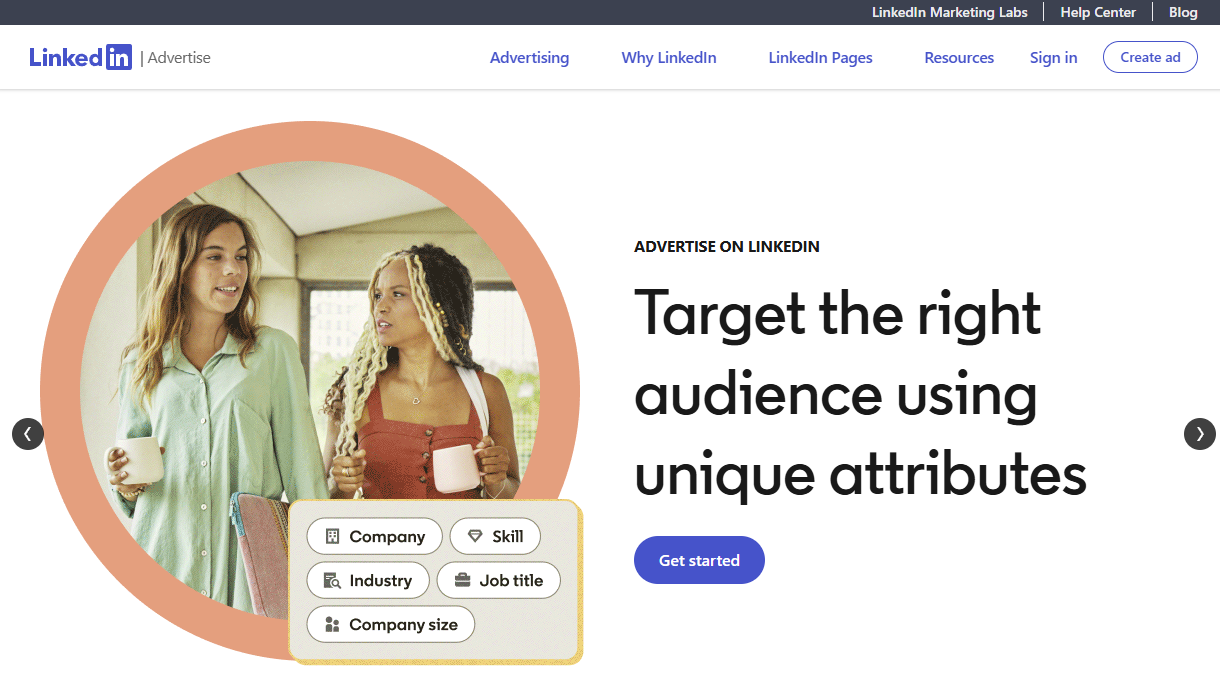
Figure 1: Starting page of LinkedIn Advertise website.
Source: LinkedIn Advertise
The platform then prompts the user to assign an account name and link the account to a LinkedIn Page (see Figure 2). If no appropriate institutional page is available, a new one must be created.
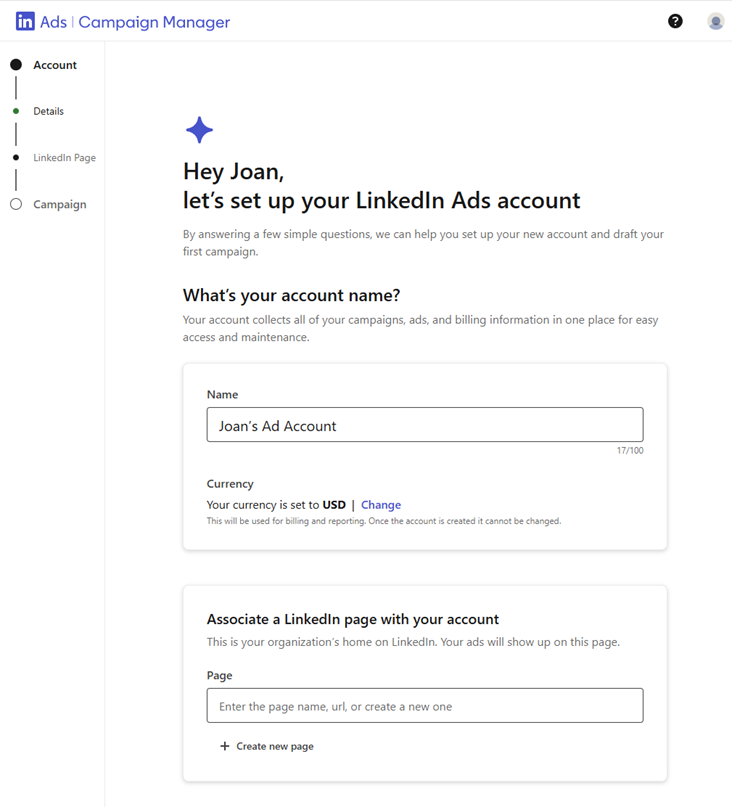
Figure 2: LinkedIn ads account set up.
Source: LinkedIn Campaign Manager
After this step, the ad account provides access to campaign creation, audience definition, and budgeting functions.
LinkedIn page
A LinkedIn page functions as the institutional or organizational identity under which advertisements are displayed. Depending on the project’s context, the page may represent:
- a company or organization (e.g., a research institute),
- a showcase page (a subpage linked to a main institutional account), or
- an educational institution (e.g., an University).
Unlike platforms such as Facebook (Meta), LinkedIn does not currently offer a dedicated project or educational page type, meaning researchers must register under one of the existing categories. Each page requires basic information such as a name, a public URL, the industry, and the size of the organization (see Figure 3). In addition, it is possible to indicate further information (i.e., logo and a short organizational slogan). For research recruitment, using an institutional page (for example, a university department or research group) can increase credibility and transparency in the eyes of potential participants.
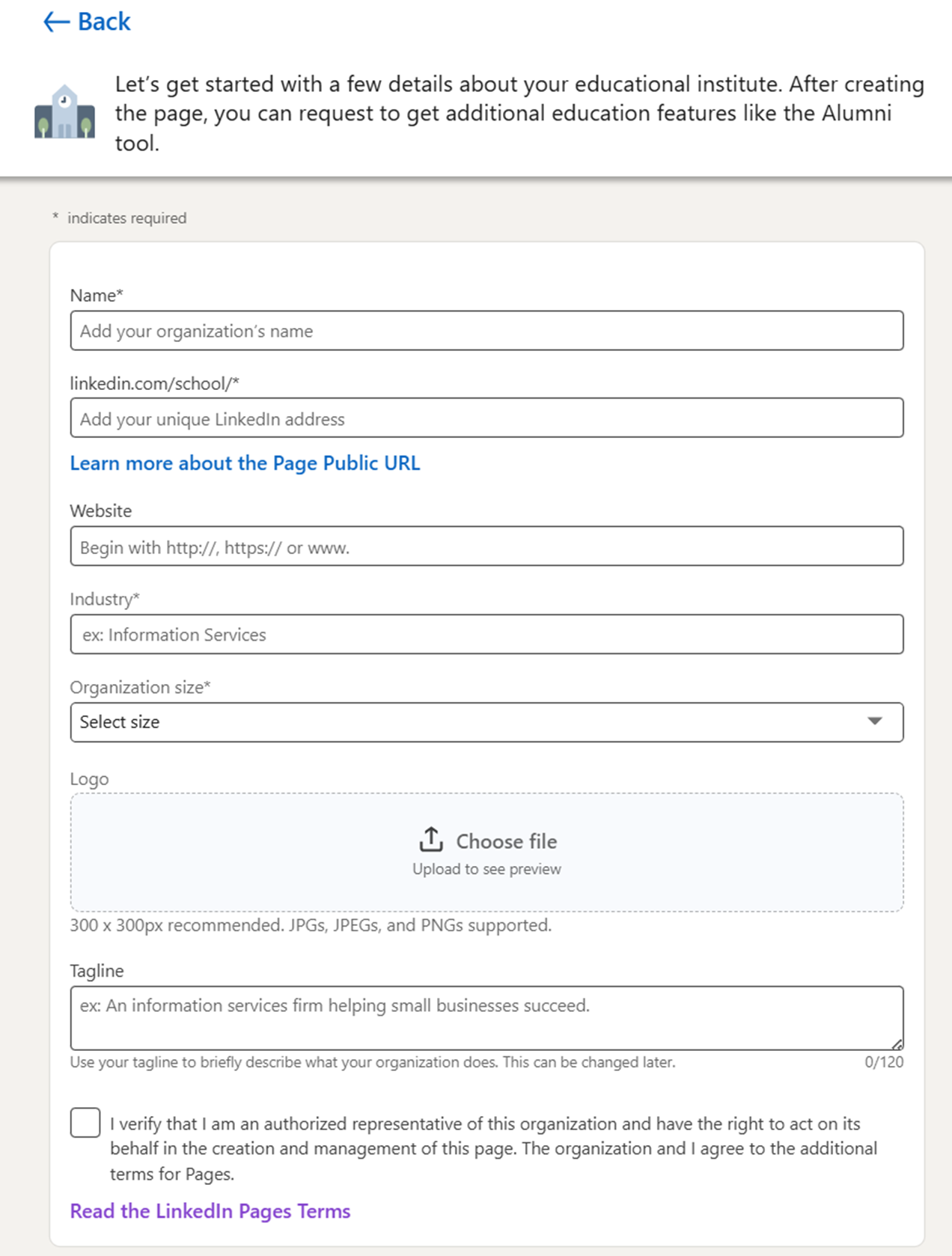
Figure 3: Set up LinkedIn page – example: educational institute.
Source: LinkedIn Campaign Manager
Setting up an ad campaign
The LinkedIn advertising system follows a three-tier hierarchical structure:

Figure 4: LinkedIn advertising system
Source: Own illustration.
Each tier governs a different aspect of the set-up, from defining overall objectives to specifying detailed audience characteristics and ad creatives. Understanding this structure is essential for organizing an effective and transparent recruitment effort.
Campaign level
At the highest level, the campaign establishes the overarching goal and organizational framework of the recruitment project. LinkedIn offers three types of objectives (see Figure 5):
- Awareness (increasing visibility),
- Consideration (encouraging engagement), and
- Conversion (prompting specific actions).
For survey recruitment, the “Website visits” option under the Consideration category is generally most suitable, as it directs users to an external landing page, typically the survey entry point.
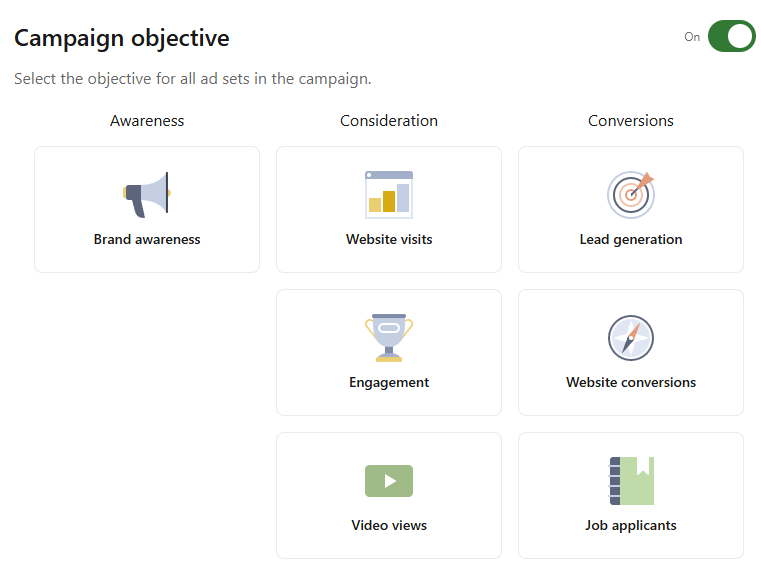
Figure 5: Choosing a campaign objective
Source: LinkedIn Campaign Manager
Once the campaign objective has been chosen, LinkedIn prompts the user to select a campaign type. Two options are available: a manual setup (“Classic”) and an AI-assisted setup (“Accelerate”) (see Figure 6). While the latter automatically adjusts parameters to optimize engagement, we strongly recommend avoiding it. Algorithmic optimization introduces unknown and uncontrolled sources of bias into audience selection, thereby comprising the transparency and replicability required in scientific research. Manual configuration ensures that all targeting and budgeting decisions remain under the advertiser’s, that is, the researcher’s control and can be documented in detail.
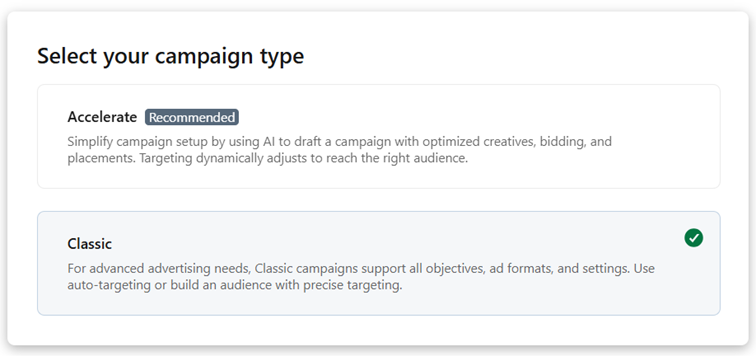
Figure 6: Selecting a campaign type
Source: LinkedIn Campaign Manager
After selecting the campaign type, researchers must determine the ad creation process, that is, how individual advertisement will be assembled and optimized within the campaign. Again, LinkedIn offers two routes: Flexible ad creation and standard ad creation (see Figure 7). In the flexible ad creation mode, the platform automatically generates and tests different combinations of ad elements (e.g., images, headlines, and descriptions) and allocates the budget to those combinations that achieve the best predicted performance. This process resembles A/B testing but is fully automated. Although potentially efficient, this approach lacks transparency. The platform does not disclose the criteria used to define “best performance” nor how these predictions are generated. Consequently, it introduces algorithmic bias and variation that are not under research control. In research contexts, the standard ad creation mode is clearly preferable. This mode requires researchers to manually configure each ad creatively. All text and visual elements, as well as audience and delivery settings, are explicitly defined by the researchers. This manual process ensures that recruitment materials remain consistent and that all campaign parameters are fully reproducible and can be reported in a methods section.
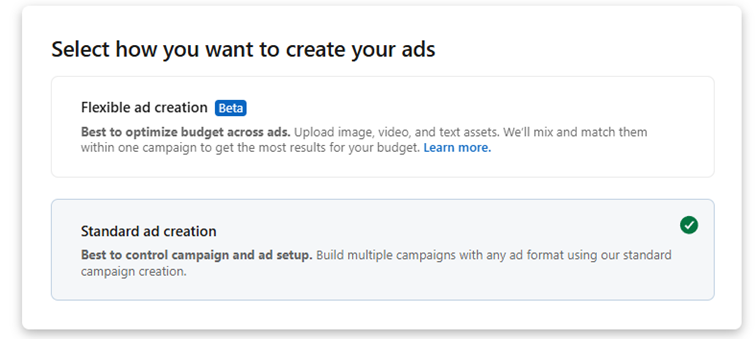
Figure 7: Selecting an ad creation process
Source: LinkedIn Campaign Manager
After determining the creation route, the campaign configuration also includes the definition of schedule and budget parameters (see Figure 8). Researchers may specify:
- a start and end date for the campaign,
- a total (lifetime) budget, and
- whether budget optimization across campaigns should be enabled.
Again, we recommend disabling all forms of automated budget optimization. Although these features can improve marketing efficiency by reallocating funds to higher-performing ads, they rely on algorithmic assessments that are not accessible to researchers and could bias the recruited sample in unknown and unobservable ways.
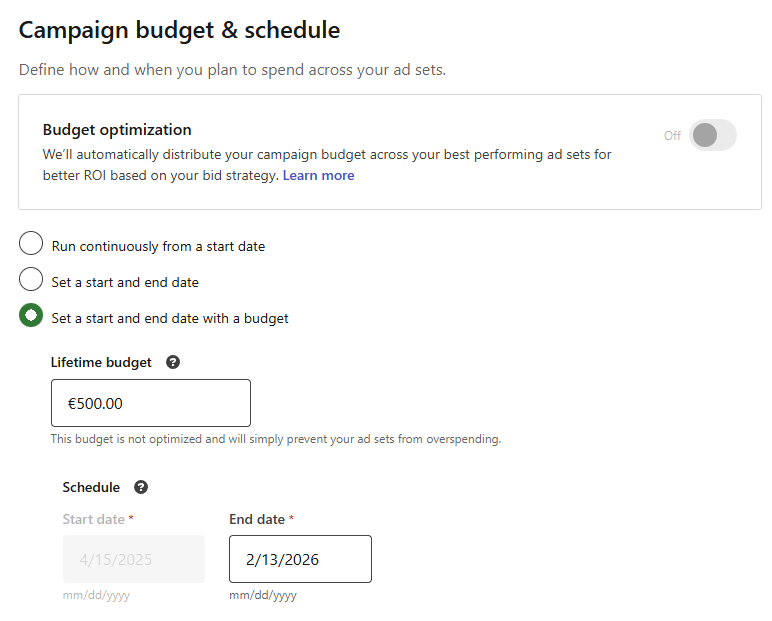
Figure 8: Campaign details
Source: LinkedIn Campaign Manager
Ad set level
At ad set level, the researcher defines the target population, that is, the group of LinkedIn users who will be exposed to the survey advertisement. LinkedIn provides numerous targeting attributes derived from the members’ professional profiles, company pages, and inferred behavioral or interest signals (see Figure 9). Table 1 provides a comprehensive overview of the main attribute categories and typical options within each. Where known, information on how LinkedIn obtains or infers that information is indicated.
Note: Data availability and functionality may vary by region due to privacy regulations, particularly with the Europeam Economic Area and Switzerland.
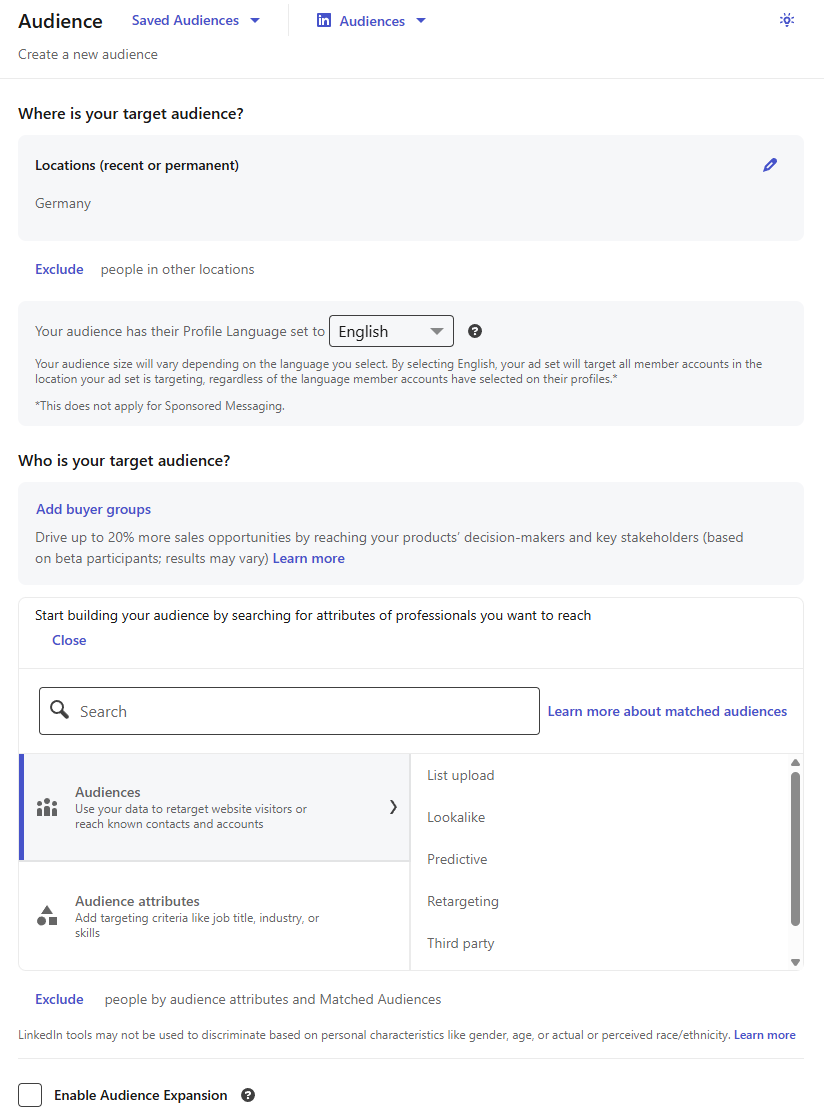
Figure 9: Definition of target audience
Source: LinkedIn Campaign Manager
As seen in Table 1, researchers have various options for target parameters. Therefore, is important that targeting parameters must never be used to discriminate against individuals based on protected characteristics such as gender, age, or actual or perceived race or ethnicity. Researchers should also comply with platform-specific restrictions and regional regulations that limit the use of sensitive targeting criteria. The option “enable audience expansion” should be deactivated (see Figure 9). This algorithmic extension may deliver ads to users outside the intended target population and thus undermine the transparency and controllability of the sample frame. LinkedIn’s Campaign Manager also displays an estimated performance forecast, showing projected target audience size, impressions, clicks, and costs (see Figure 10). These values can assist in budget planning but are based on proprietary models and should be interpreted as approximate indicators only, not as precise predictions.
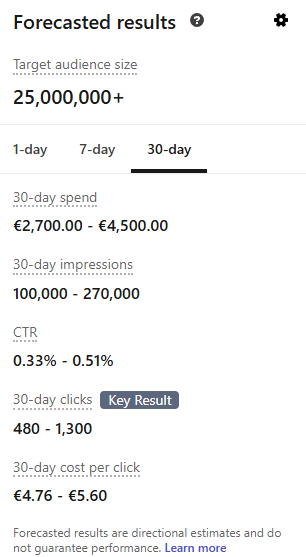
Figure 10: Forecasted results
Source: LinkedIn Campaign Manager
Once the campaign objectives and audience have been defined, the next step is the selection of an appropriate advertisement format (see Figure 11). LinkedIn currently offers several formats that differ in visual layout, degree of interactivity, and expected engagement levels. The choice of format should align with the overall research design, recruitment objectives, and desired intensity of participation involvement. Available formats include, among other:
- Single image ads: static image with headline and text,
- Carousel ads: multiple scrollable image cards that allow the presentation of different aspects or topics within one advertisement, and
- Video ads: short clip (15-30 seconds) combining visuals and text to communicate information dynamically.
For most survey recruitment, these formats are generally the most suitable due to their high visibility and clear message presentation.
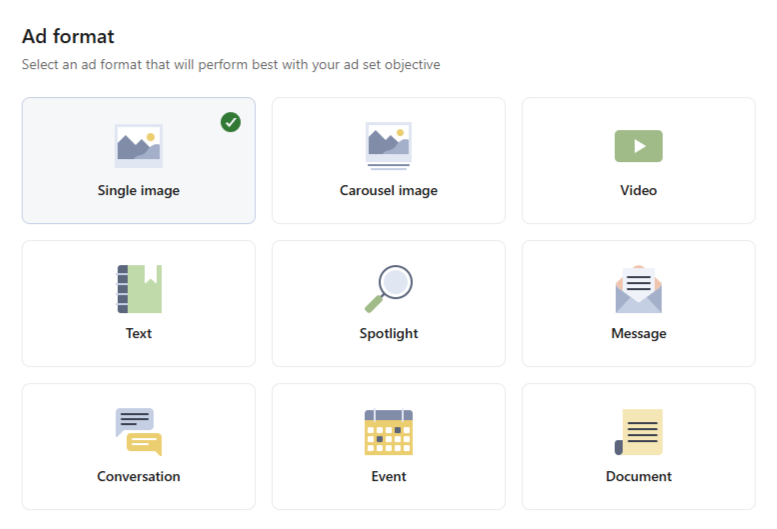
Figure 11: Ad format
Source: LinkedIn Campaign Manager
The integration of URL tracking parameters (e.g., UTM codes) into the destination link is recommended to enable transparent performance monitoring (see Figure 12). A typical example would be:
utm_source=[SOCIAL MEDIA PLATFORM]&utm_medium=[PAYMENT EVENT]
&utm_campaign=[CAMPAIGN NAME]&utm_content=[AD ID].
This method complies with data protection requirements and does not collect personal information. It simply allows researchers to distinguish traffic from different platforms or creatives in their web analytics.
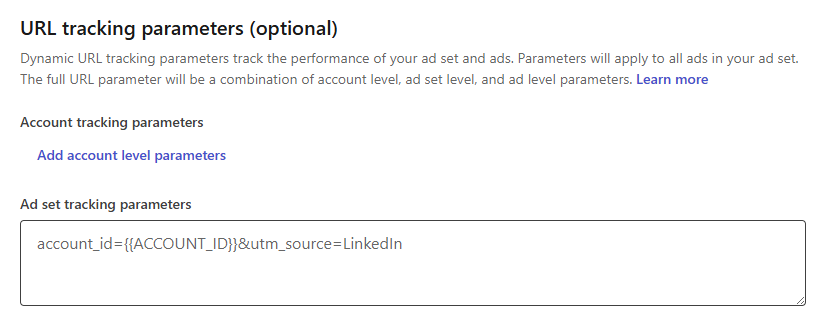
Figure 12: URL tracking parameters
Source: LinkedIn Campaign Manager
Ad placement is then specified (see Figure 13). The LinkedIn feed should be selected as the primary placement to ensure visibility in a professional context. The LinkedIn Audience Network, which extends ad delivery to partner websites and apps, should be deactivated in research campaigns to maintain control and transparency regarding where exactly recruitment occurs.
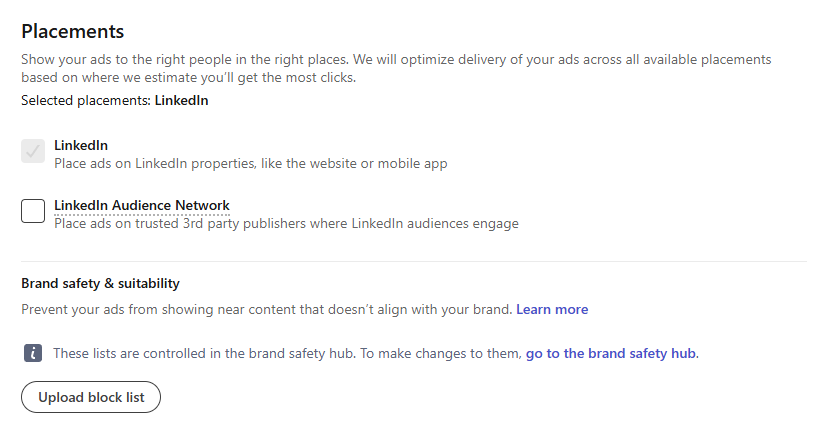
Figure 13: Placements option
Source: LinkedIn Campaign Manager
The budgeting model determines how funds are distributed over time (Figure 14). LinkedIn provides three options:
- Daily budget: specifies maximum daily expenditure, ensuring consistent ad delivery,
- Lifetime budget: sets a total expenditure limit for the campaign period, and
- Combined budget: applies both daily and lifetime limits for maximum control.
Short-term campaigns benefit from daily budgets to maintain stable exposure, while longer recruitment periods may require lifetime or combined budget settings. Key performance metrics such as impressions, click-through rate (CTR), and cost per click (CPC) should be monitored throughout the campaign and reported alongside sample characteristics.
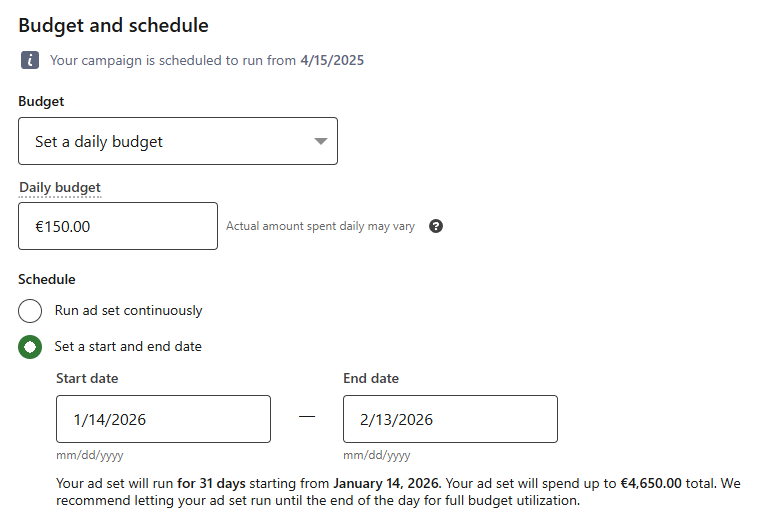
Figure 14: Budget and schedule options
Source: LinkedIn Campaign Manager
The bidding strategy determines how LinkedIn allocates ads in its auctions system (Figure 15). LinkedIn currently offers three bid types:
- Maximum delivery: an automated bidding option where LinkedIn’s system sets the bid with the goal of spending the full budget and maximizing the selected key result,
- Cost cap: an automated option where LinkedIn sets bids while trying to keep the average cost per key result close to a user-specified target (e.g., CPC or CPM), and
- Manual bidding: a more hands-on option where advertisers set an explicit bid value that is used in the ad auction.
From a research perspective, there is a trade-off between cost-efficiency and methodological control. Fully automated options such as maximum delivery can be convenient and may help use the budget efficiently, but they also shift additional decision-making to opaque algorithms. Where fine-grained cost control and transparency are priorities, cost cap or even manual bidding may be preferable, provided that campaigns are monitored closely, and bid levels are adjusted if necessary. Regardless of the chosen strategy, researchers should document the bid type and any changes during fieldwork so that recruitment conditions can be accurately reported.
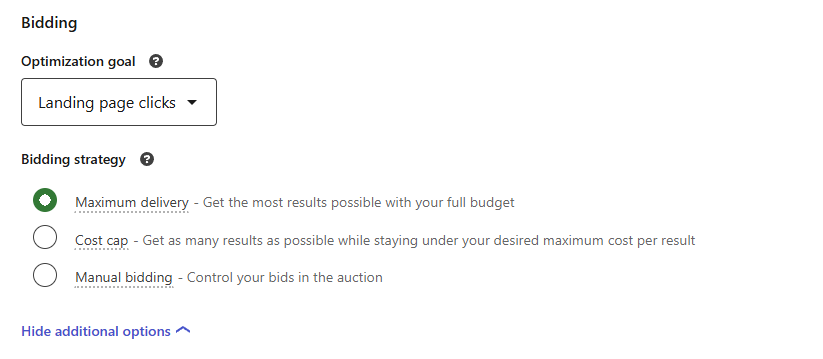
Figure 15: Bidding options
Source: LinkedIn Campaign Manager
Although LinkedIn supports conversion tracking via tracking pixels (see Figure 16), this method is ethically and legally problematic in research contexts. Tracking pixels typically collect behavioral data across websites (e.g., page views, time spent, subsequent actions) and can be used to link on-platform interactions with off-platform behavior. Under data protection frameworks such as the General Data Protection Regulation (GDPR), such tracking requires a valid legal basis and, in most cases, informed consent: participants must be clearly informed before any tracking takes place about what data are collected, for what purpose, on which legal basis, how long they are stored, and with whom they may be shared. Only if users have actively agreed (e.g., via a consent banner or consent form on the landing page) may tracking pixels be activated. However, for scientific campaigns, this form of tracking is usually difficult to justify. Social media platforms and advertising networks have repeatedly been affected by data breaches and other security incidents (e.g., Das 2023; Feathers et al. 2022; Fondrie-Teitler et al. 2022). When third-party tracking is enabled, additional actors gain access to behavioral data and identifiers, increasing the potential attack surface. Even if the probability of a breach is difficult to quantify, the possible consequences for participants – for example, the unintended disclosure of sensitive behavioral patterns or re-identification risks when log data are leaked – can be substantial. From a risk-minimization perspective, avoiding non-essential tracking is therefore a central protective measure. We therefore recommend that researchers do not use LinkedIn’s conversion tracking or similar third-party tracking pixels for recruitment. Instead, evaluation should rely on aggregate campaign statistics (impressions, clicks, CPC) provided by the platform, combined with survey-based indicators (e.g., completion rates and a self-reported recruitment channel question on the first page of the questionnaire, asking participants how they became aware of the study).
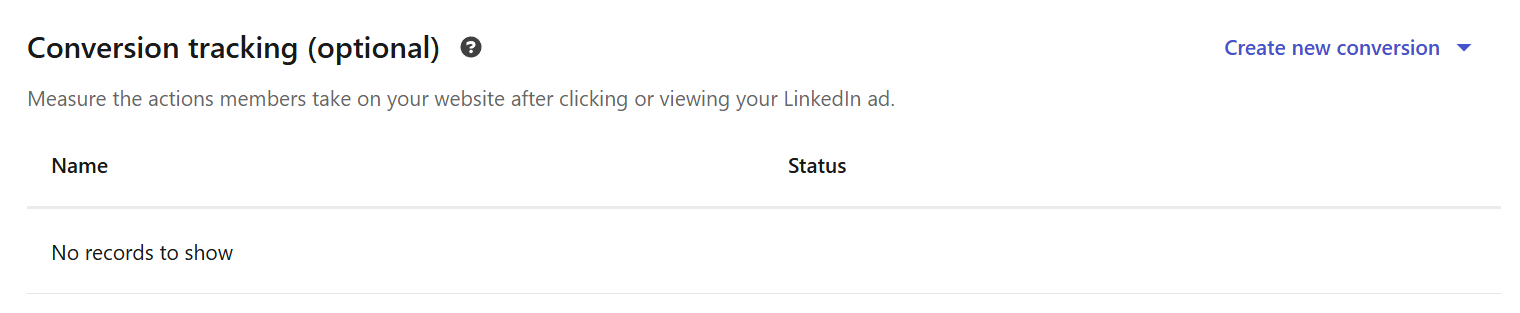
Figure 16: Conversion tracking
Source: LinkedIn Campaign Manager
Ad level
At the ad level, the creative elements that LinkedIn users are exposed to are defined. The design of these elements can draw on established findings from research on invitation letters in survey methodology. In line with this literature, ad content should be convincing and informative, and should convey a clear perceived leverage for participation, for example by highlighting the social value of the study, the relevance of the topic for the target population, or the opportunity to contribute one’s perspective (e.g., Dillman et al. 2014 ; Groves et al. 2000). On LinkedIn, as on other social media platforms, an ad competes with a large volume of other digital content. Consequently, the ad must first attract attention within a very short time frame and then provide sufficient relevance and clarity to motivate users to click on the ad and proceed to the survey landing page. The introductory text (Figure 17) – typically the most prominent text element in the ad – should succinctly communicate the purpose of the study and its relevance for the targeted audience. A concise structure is advisable: one sentence specifying what the study is about and who it addresses, followed by a sentence that conveys why participation is meaningful (e.g., expected benefits, contribution to knowledge, or policy relevance).
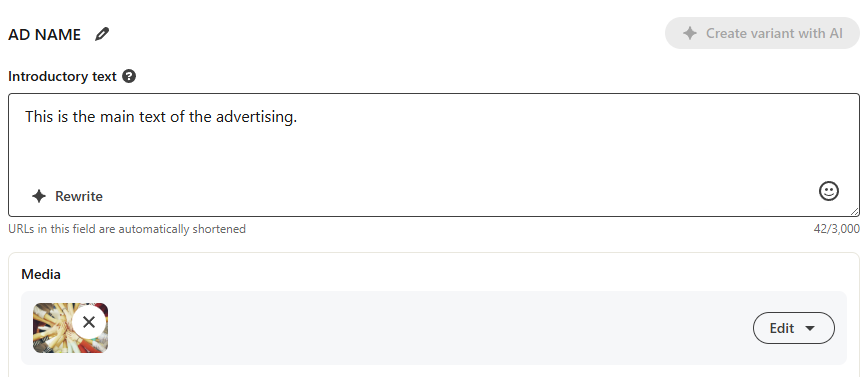
Figure 17: Ad design - Text and media input
Source: LinkedIn Campaign Manager
The visual content serves as the primary attention grabber and can function as an additional targeting device (Figure 17). On LinkedIn, visuals are often embedded in a professional and organizational context, for example by depicting typical work situations (e.g., team meetings, hybrid collaboration, industry-specific workplaces), abstract graphics related to the topic (e.g., charts, icons for digitalization or skills), or neutral employer-branding style imagery. When these visuals are clearly aligned with a specific survey topic – for instance, leadership and management practices, remote work arrangements, skills development, or employee well-being – they can increase click-through rates and the number of completed questionnaires, because they immediately signal topical relevance to certain occupational groups or sectors. At the same time, these visuals may amplify self-selection on work-related attitudes or experiences (e.g., job satisfaction, perceived stress, views on organizational change), as they are particularly salient for individuals with above-average involvement or strong opinions (Donzowa et al. 2025; Zindel et al., 2025). This implies a trade-off: if recruitment within a narrowly defined topic area is prioritized, topic-specific professional visuals are advantageous; if concerns about attitudinal bias are central, more neutral or general workplace imagery may be preferable. In addition to the visual itself, LinkedIn offers the option to set an image alt text (Figure 18). This alt text enhances accessibility for users who rely on screen readers and is displayed if the image cannot be rendered. From a survey recruitment perspective, the alt text should provide a concise, neutral description of what is shown in the image and, where appropriate, can briefly restate the topic of the study (e.g., “Illustration of professionals discussing climate policies in an office setting”). Overly promotional language or keyword stuffing should be avoided. The goal is to ensure that the meaning of the visual remains understandable even in the absence of the actual image and that the alt text is consistent with the overall framing of the study (cf. [World Wide Web Consortium [W3C], 2025[(https://www.w3.org/TR/WCAG21/)]).
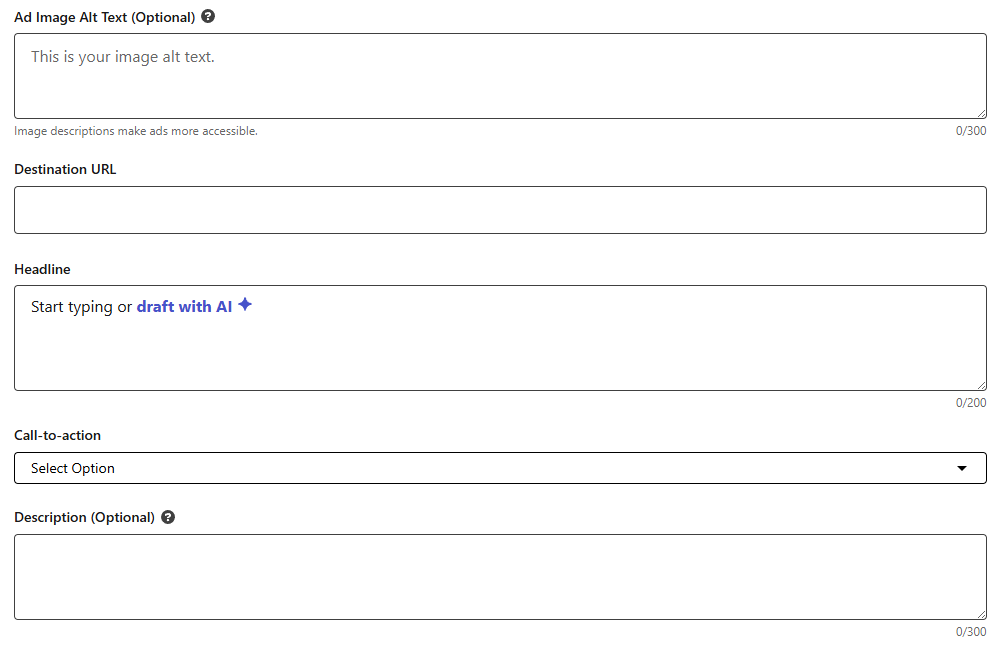
Figure 18: Ad design - Further options
Source: LinkedIn Campaign Manager
The destination URL is the link to the survey website and leads directly to the survey entry page, without intermediary pages or redirects. This entry page must present the informed consent statement and essential information on data protection, study sponsors, and contact details before data collection begins. From a user-experience perspective, the number of steps between the ad (i.e., the survey invitation) and the first survey question should be minimized, as each additional step potentially increases drop-off probabilities (cf. Tourangeau et al. 2013). Besides the introductory text and the image, LinkedIn ads typically include a headline and an optional ad description. The headline is usually displayed in a highly prominent position and should therefore be short, specific, and benefit oriented. For survey recruitment, headlines that clearly state the topic and target group (e.g., “Short survey on remote work for HR professionals”) are generally preferable to vague or purely promotional formulations. The ad description provides additional information to people who see the ad. However, this field is not visible in most scenarios and will only appear for a small portion of LinkedIn members, for example in certain placements on the LinkedIn Audience Network (if enabled). Accordingly, essential information about the study should not be placed exclusively in the description but should already be contained in the introductory text and headline. The description can be used as a secondary field to elaborate on the headline, clarify what happens after the click, indicate approximate survey length, or highlight a specific leverage (e.g., “10-minute academic survey, anonymous, results will inform future workplace policies”). Given that descriptions may be truncated or omitted depending on device and placement, key information should appear at the beginning of the text and should not be critical for understanding the study. The call-to-action (CTA) button should be consistent with the overall framing of the ad and align with user expectations on a professional platform. LinkedIn offers several standard CTA options, including “Learn more”, “Sign up”, “Register”, and others. For survey recruitment, a CTA such as “Learn more” is typically most appropriate, as it signals low-threshold, information-oriented action compatible with participation in a research study. In settings where the survey is embedded in a broader program or panel, “Sign up” or “Register” may also be suitable.
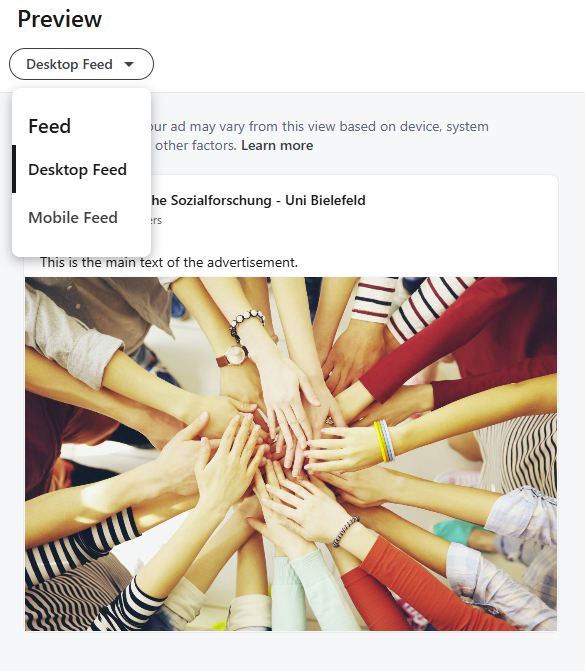
Figure 19: Ad preview
Source: LinkedIn Campaign Manager. Image by Africa Studio via stock.adobe.com.
Prior to launch, the preview function in Campaign Manager should be used to verify appearance across devices and placements (see Figure 19). Across all ad components, internal consistency is crucial. The introductory text, headline, description, visual elements (including alt text), destination URL, and CTA should convey a coherent message and set realistic expectations about the survey experience. A consistent, methodologically informed ad design that is at the same time adapted to platform-specific norms on LinkedIn potentially increases the likelihood of attracting suitable respondents rather than merely generating clicks.
Ethical considerations
When recruiting survey participants via social media, particular attention should be paid to ethical and data protection issues. Most important, all procedures must comply with applicable data protection frameworks (e.g., GDPR), including a clear specification of the legal basis for processing, information on storage periods, and contact details of the responsible data controller and, where applicable, the data protection officer. Moreover, recruitment messages and landing pages should be transparent about the study’s purpose, the institutions involved, and the intended use of the data. Participants should be informed about their data protection rights (e.g., rights of access, rectification, erasure, restriction of processing, and complaint) in a concise and comprehensible way. Where surveys are anonymous, this should be explicitly communicated and technically ensured, for instance by avoiding the collection of directly identifying information and by separating contact data from survey responses if recontact is planned. Where anonymity cannot be fully guaranteed – for example because organization-level or very narrow professional targeting makes the population of potential invitees very small – this limitation should be stated clearly. In such cases, it should be emphasized that confidentiality will nonetheless be preserved, for example through secure data handling and the exclusive reporting of results in aggregated form. Given that recruitment on LinkedIn and similar platforms can take place at very specific levels (e.g., by employer, job title, industry niche, or narrowly defined professional segments), the risk of de facto identifiability of respondents may be higher than in general-population web surveys. This applies in particular when small organizations or rare occupations are involved. Ethical scrutiny is therefore essential. Targeting strategies should avoid extremely small and potentially identifiable groups where this is not strictly necessary for the research aim, and analysis and reporting should follow minimum cell-size rules to prevent the indirect identification of individuals or specific organizations. It is strongly recommended to seek approval or at least formal advice from the relevant ethics committee at the home institution or from an external ethics body before fieldwork begins. An ethics review helps to ensure that the sampling and recruitment strategy is appropriate, that privacy and confidentiality risks are minimized, that the informed consent procedure is adequate, and that the study aligns with existing ethical guidelines and professional codes of conduct.
Application example
This section illustrates how the LinkedIn recruitment workflow described above can be applied in practice. It summarizes the design, implementation, and outcomes of an exemplary advertising campaign conducted as part of a master’s seminar at Bielefeld University in summer term 2024 titled “Sociological methods - quantitative: Survey-based measurement of inclusion and diversity in companies: Development and implementation of employee surveys”, taught by Zaza Zindel and Lisa de Vries.
Within this seminar, students developed a questionnaire to measure inclusion and diversity in workplace settings. The instrument comprised 37 items, including the following topics:
- Working life (7 items)
- Career orientation (3 items)
- Diversity (3 items)
- Discrimination (4 items)
- Health (6 items)
- Sociodemographic (13 items)
- Closing question (1 item).
The target population consisted of employees in Germany aged 18 years or older. The survey was programmed using the software LimeSurvey. To reach the target population without cooperation from specific companies, survey recruitment was carried out via LinkedIn ads. A total budget of 500 Euro was allocated for the campaign.
Ad campaign details
Following the three-tier campaign structure described above, the campaign was configured at the campaign, ad set, and ad levels. A dedicated LinkedIn page titled “Empirische Sozialforschung – Uni Bielefeld” (English translation: “Empirical Social Research – Bielefeld University” was created to host the ads and serve as the institutional identity for the recruitment process (see Figure 20).
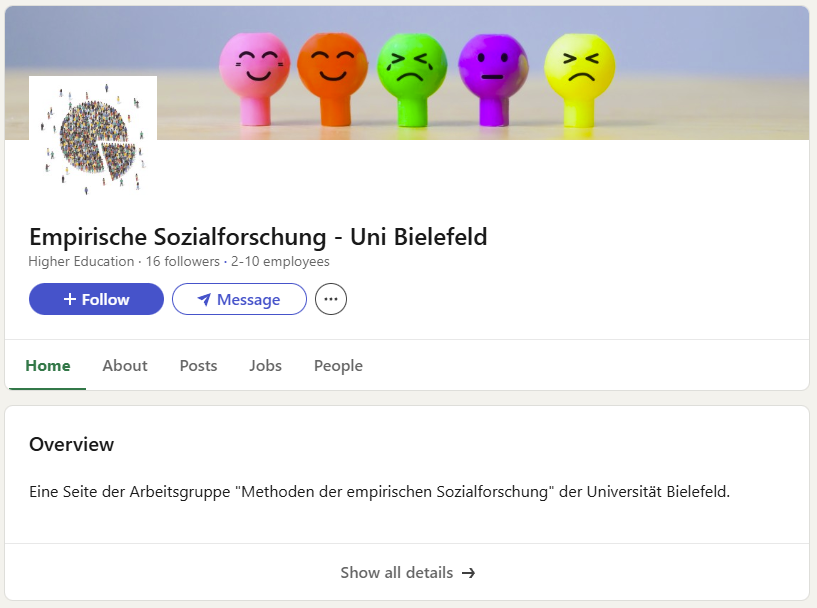
Figure 20: LinkedIn page: Empirical social research – Bielefeld University
Source: LinkedIn Campaign Manager. Images by Monster Ztudio and Siberian Art via stock.adobe.com.
Ad creatives
Two separate advertisements in the single image format were developed. They used identical textual content but different ad images to examine how visuals influence engagement (Figures 21 and 22).
Headline: We want your opinion: Take part in our survey on the German labor market! Introductory text: Help us better understand the German labor market! We are looking for participants for a short survey that is part of a scientific study conducted by Bielefeld University. The survey is aimed at all employed people aged 18 and over in Germany.
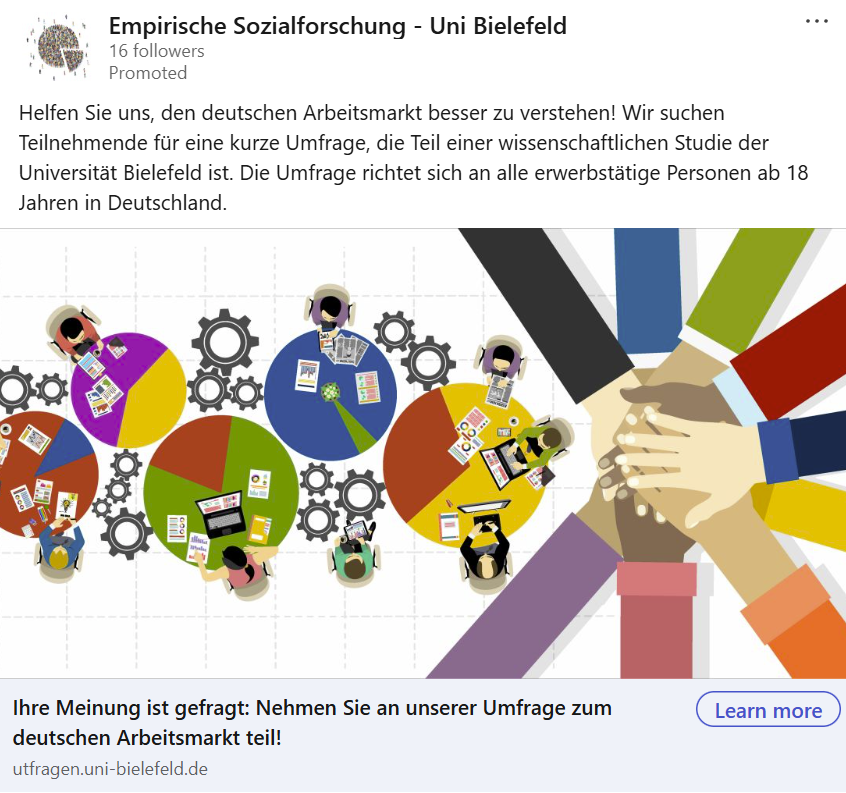
Figure 21: Targeting ad 1 used to recruit participants on LinkedIn
Source: LinkedIn Campaign Manager. Image by mitay20 via stock.adobe.com.
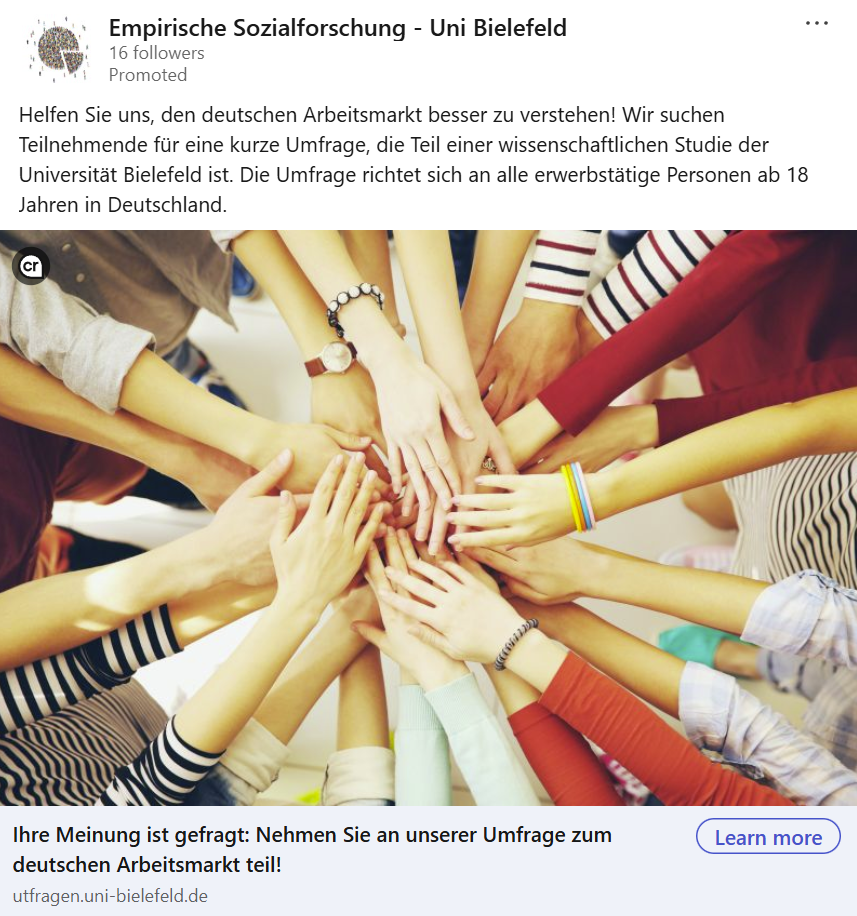
Figure 22: Targeting ad 2 used to recruit participants on LinkedIn
Source: LinkedIn Campaign Manager. Image by Africa Studio via stock.adobe.com.
Campaign setup
Both advertisements employed identical targeting criteria to ensure comparability across creatives. To recruit broadly from employed individuals in Germany, targeting was restricted to:
- Location: Germany
- Profile Language: German
- Age: 18+ years
No additional targeting criteria were applied, and audience expansion was disabled. The placement was set to LinkedIn Feed only and audience network placements was disabled. A lifetime budget of 500 EUR was defined, optimization goal was landing page clicks, and the bidding strategy was maximum delivery until all the budget is spent.
Campaign results
The LinkedIn recruitment campaign ran for five consecutive days, from 6 to 10 July 2024, and was managed through LinkedIn Campaign Manager using the institutional page created for this project. Across both advertisements, the campaign reached a substantial professional audience and generated a sizeable number of completed interviews within a modest budget. Table 2 summarizes the performance metrics for both advertisements. In total, the two ads produced 56,990 impressions, resulting in 301 link clicks. Of those who clicked on the advertisement, 143 started the interview and 98 completed the questionnaire. With a total spend of 500 EUR, this corresponds to an overall cost per click (CPC) of 1.66 EUR and a cost per completed interview (CI) of 5.10 EUR. These results suggest that LinkedIn Ads can serve as an efficient recruitment channel for workplace-related surveys, producing a relatively high number of completed questionnaires at moderate cost.
Note: CTR = Click-through-Rate, CPC = Cost per click, CI = completed interview.
Both ads achieved a click-through rate (CTR) of roughly 0.5% (0.54% for Ad 1 and 0.52% for Ad 2). The overall CPC was 1.66 EUR, with a slightly lower CPC for Ad 1 (1.58 EUR) than for Ad 2 (1.73 EUR). At the same time, Ad 2 produced more completed interviews (57 compared to 41) and therefore a slightly lower cost per completed interview (5.03 EUR for Ad 2 versus 5.20 EUR for Ad 1). These differences are numerically small, but they show that the two creatives did not behave identically in terms of cost structure, even though they were identical in text and targeting. The delivery patterns of the two ads are also differed. Ad 1 was shown to a larger number of unique users (reach 7,269) and with a lower average frequency (3.45 displays per user). Ad 2, by contrast, reached fewer unique users (5,189) but was displayed more often to those who were reached (average frequency 6.15). Thus, the total number of impressions was higher for Ad 2, even though its reach was lower. Within the constraints of the shared targeting, this indicates that LinkedIn’s delivery system concentrated Ad 2 more strongly on a subset of the potential audience, while Ad 1 was distributed more broadly.
Sample composition
The composition of the achieved sample reflects the characteristics of those LinkedIn users who clicked on the advertisements, proceeded to the survey, and completed the questionnaire. Table 3 shows the distribution of the sociodemographic variables. Respondents are distributed across all age groups included in the questionnaire, with the largest shares in the ranges 45–54 years (31.6%) and 35–44 years (29.6%) (age mean: 45.84; Range: 23-69). Regarding gender, 62 respondents identify as female and 32 as male, while four respondents did not answer this question. No respondent selected the response option for another gender identity. Education attainment in the sample is strongly concentrated at the higher end of the scale: Most respondents have a higher secondary school diploma (85.7 %), further 10.2 percent hold a secondary school diploma. If we compare the composition of sociodemographic variables with the whole population in Germany, we see that the sample contain relatively few young people (Statistisches Bundesamt 2025a). Even if 21.4 percent of the sample are 55 years and older, only 10.4 percent are 60 years and older, and no respondents are older than 70. In 2023, 29,8 percent of the population were 60 years and older based on Zensus (Statistisches Bundesamt 2025a). These differences may be due to the fact that LinkedIn is used particularly by people of working age who are neither in education nor retired. Moreover, the percentage of women and the educational attainment in the sample is higher than in the whole population in Germany (Statistische Ämter des Bundes und der Länder 2025a; Statistische Ämter des Bundes und der Länder 2025b).
Source: Dataset “DEI Companies” recruited on LinkedIn; own calculations.
Table 4 presents the occupational variables. Most respondents report full-time employment (75.5%), while 19.4 percent work part-time. Only four respondents indicated marginal or no employment. In 2024 in Germany, the unemployment rate was 3.1 percent, and the part-time rate was 29,1 percent (Statistisches Bundesamt 2025b; Statistisches Bundesamt 2025c). Firm size is also skewed toward larger organizations: 58.2 percent of the respondents work in companies with more than 200 employees, and 24.5 percent work in firms with between 20 and 200 employees. Only 15.3 percent of respondents report working in small firms with fewer than 20 employees. Based on Destatis, in 2023, nearly the half of the German population work in large companies (Statistisches Bundesamt 2025d). With regard to leadership roles, 24.5 percent indicate that they hold a leadership position, while 59.2 percent do not. Notably, 16 respondents did not answer this question, resulting in a higher share of missing values than the other occupational variables. The distribution across industry sectors covers a broad range of fields. The largest groups of respondents work in manufacturing (15.3%), information and communication (15.3%), and human health and social work activities (15.3%). Other sectors represented in the sample include scientific and technical activities, education, financial and insurance activities, public administration, and several smaller categories. Even if the share of people working in the manufacturing sector is smaller in the sample than in the general population, that a relatively high percentage work in the area of services (e.g., education or human health and social work activities) is also true in the general population (Statistisches Bundesamt 2025e; Statistisches Bundesamt 2025f).
Source: Dataset “DEI Companies” recruited on LinkedIn; own calculations.
The discussed patterns are consistent with previous evidence that LinkedIn use is concentrated among higher-income professionals and knowledge-intensive occupations (Van Dijck, 2013; Blank & Lutz, 2017) and underlines that LinkedIn-based samples capture a selective segment of the working-age population.
Summary and key takeaways
LinkedIn provides a distinctive infrastructure for survey recruitment in professional and occupational populations. Its career-focused user base, comparatively low noise-to-signal ratio, and rich profile data on education, industry, and employment make it particularly suitable for studies on labor markets, workplace dynamics, and professional attitudes. In contrast to general-purpose platforms such as Instagram or TikTok, LinkedIn is designed around work, networking, and expertise. As a result, it tends to reach individuals of working age, often with medium to high levels of education and strong labor market attachment, which is reflected in the sample composition of the application example presented in this tutorial. This step-by-step guide provided an overview of how to use LinkedIn ads to recruit participants for survey research. The application example from Bielefeld University illustrates that with a moderate budget, LinkedIn can yield a substantial number of completed interviews at reasonable cost, while also highlighting typical patterns such as the overrepresentation of highly educated respondents and specific age groups.
Taken together, the key takeaways from this tutorial can be summarized as follows:
- Alternative recruitment channel: LinkedIn offers a viable alternative to conventional sampling approaches and general social media platforms for reaching employed and occupationally defined populations.
- Distinct user structure: Compared to platforms such as Instagram or TikTok, LinkedIn tends to reach individuals in mid-career and higher educational strata, which is advantageous for many labor market-related studies.
- Fine-grained targeting: Detailed targeting by job title, industry, company size, skills, and other professional attributes enables access to niche populations that are otherwise difficult to sample.
- Selective coverage and bias: Only certain groups are reachable via LinkedIn, and topic-specific visuals or messaging can reinforce self-selection, requiring careful interpretation of substantive findings.
- Heightened ethical responsibilities: Because targeting can be highly specific, ethical issues around privacy, identifiability, and fair treatment are particularly salient and call for robust consent procedures, conservative reporting practices, and prior ethics review.
- Potential stability over time: As a professional networking platform, LinkedIn may be less prone to rapid shifts in usage patterns than entertainment-oriented social networks, potentially providing a relatively stable environment for recurring or longitudinal recruitment; however, this requires continued empirical monitoring.
- Need for further evidence: Future studies should systematically evaluate recruitment efficiency, sample quality, and bias across different designs and topics and explore, where ethically permissible, whether and how organizational or contextual information can be incorporated without compromising participant protection.
Further reading
Researchers interested in using social media platforms for survey recruitment may benefit from the following literature, which covers methodological, ethical, and practical aspects of recruiting survey respondents via social media advertisements. Together, these publications provide guidance on campaign design and performance, ethical and legal considerations, data quality, and the assessment of non-probability samples.
- Höhne, J. K., Claassen, J., Kühne, S., & Zindel, Z. (2025). Social media ads for survey recruitment: Performance, costs, user engagement. International Journal of Market Research. https://doi.org/10.1177/14707853251367805
- Pötzschke, S., Weiß, B., Daikeler, J., Silber, H., & Beuthner, C. (2023). A guideline on how to recruit respondents for online surveys using Facebook and Instagram: Using hard-to-reach health workers as an example. Mannheim: GESIS – Leibniz Institute for the Social Sciences (GESIS Survey Guidelines). https://doi.org/10.15465/gesis-sg_en_045
- Rohr, B., Felderer, B., Silber, H., Daikeler, J., Roßmann, J., & Schröder, J. (2024). When are non-probability surveys fit for my purpose? Mannheim: GESIS – Leibniz Institute for the Social Sciences (GESIS Survey Guidelines). https://doi.org/10.15465/gesis-sg_en_050
- Zimmermann, B. M., Willem, T., Bredthauer, C. J., & Buyx, A. (2022). Ethical issues in social media recruitment for clinical studies: Ethical analysis and framework. Journal of Medical Internet Research, 24(5), e31231. https://doi.org/10.2196/31231
- Zindel, Z., Kühne, S., Perrotta, D., & Zagheni, E. (2025). Ad images in social media survey recruitment: What they see is what we get. International Journal of Social Research Methodology, 1–20. https://doi.org/10.1080/13645579.2025.2597303
- Zindel, Z. (2026). Should we worry about problematic response behaviour in social media surveys? Understanding the impact of social group cues in recruitment. Survey Methods: Insights from the Field. https://doi.org/10.13094/SMIF-2026-00015
- Zindel, Z. (2023). Social media recruitment in online survey research: A systematic literature review. Methods, Data, Analyses, 17(2), 207–248. https://doi.org/10.12758/mda.2022.15